
How to Increase Website Trust Flow
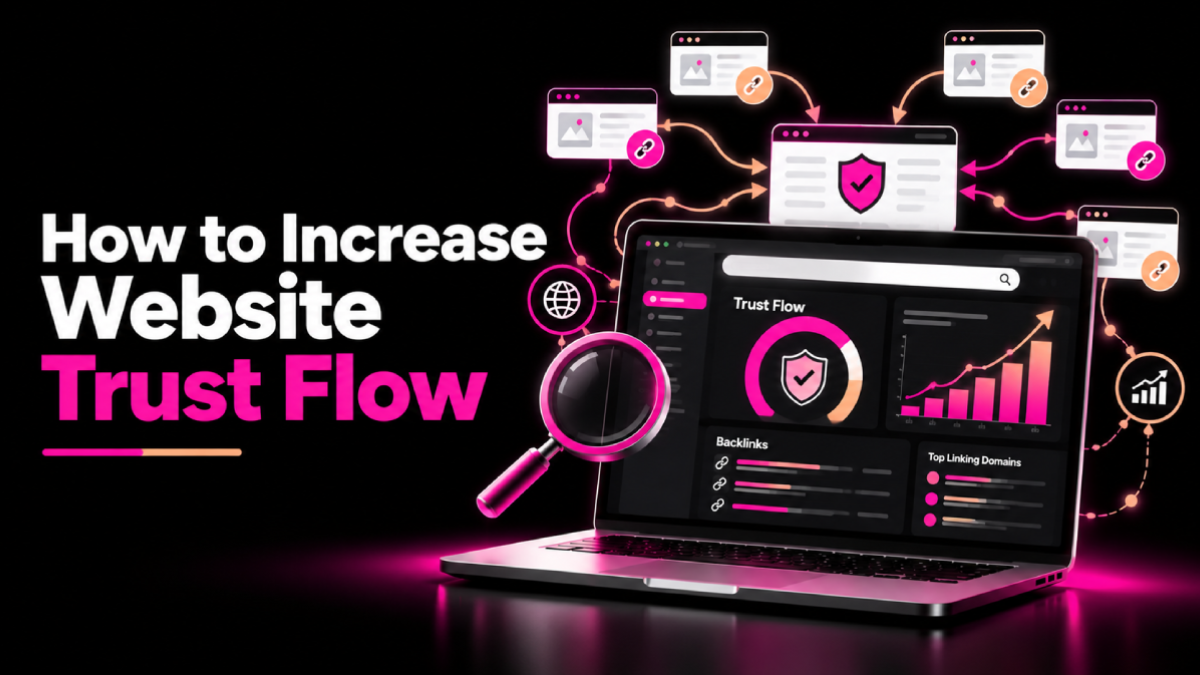
Building a strong backlink profile is an important part of a sustainable SEO strategy. However, earning hundreds of backlinks does not automatically mean your website has strong link authority. The quality, relevance, and credibility of the websites linking to you also matter.
If you want to learn how to increase website Trust Flow, start by understanding the links pointing to your domain and identifying opportunities to earn more relevant, trustworthy references.
Trust Flow is a proprietary metric developed by Majestic to evaluate backlink quality. It can help you assess your link profile, but it is not a Google ranking score. Therefore, your goal should not be to increase a number at any cost. Instead, focus on earning meaningful links that support your website’s reputation and search visibility.
This guide explains how Trust Flow works and how to improve it through practical, ethical link-building strategies.
What Is Website Trust Flow?
Trust Flow is a score developed by Majestic that estimates the quality of a website’s backlink profile. The metric uses a scale from 0 to 100, with higher scores indicating stronger link-based trust signals within Majestic’s model.
According to Majestic’s official Trust Flow guide, the metric evaluates link quality by analyzing how a website connects to trusted sources across the web.
Trust Flow can help SEO professionals evaluate websites, compare potential backlink opportunities, and identify patterns in a domain’s link profile.
However, remember three important points:
- Trust Flow is a third-party SEO metric, not a score assigned by Google.
- A higher score does not guarantee better Google rankings.
- You should interpret the score alongside backlink relevance, referring domains, organic visibility, and overall website quality.
Trust Flow vs. Citation Flow
Majestic provides Citation Flow alongside Trust Flow to help users understand different aspects of a website’s link profile.
| Metric | What it measures |
|---|---|
| Trust Flow | An estimate of backlink quality and proximity to trusted sources |
| Citation Flow | An estimate of link-based influence, with greater emphasis on link quantity and strength |
| Topical Trust Flow | The relative influence of a page or website within a particular subject category |
A website may attract many backlinks without earning proportionate Trust Flow. This can happen when its links come from weak, irrelevant, or poorly connected pages.
For example, a specialist accounting website may benefit more from a relevant link on a respected finance publication than from numerous unrelated directory links.
There is no universal ideal Trust Flow or Trust Flow-to-Citation Flow ratio. Use these metrics as diagnostic tools rather than fixed targets.
7 Proven Ways to Increase Website Trust Flow
1. Earn Backlinks From Relevant, Trusted Websites
Focus on earning links from websites that have a genuine connection to your industry or audience.
Relevant links can help users discover your business and strengthen the context surrounding your content. They may also contribute to a stronger Trust Flow score when they come from suitable sources within Majestic’s link graph.
Start by identifying publications, professional associations, industry blogs, and resource pages that serve your target audience.
Before pursuing a link, evaluate:
- The website’s relevance to your niche.
- The quality and usefulness of its published content.
- Whether real people visit or engage with the website.
- The credibility of its editorial standards.
- The context in which it could naturally reference your page.
Prioritize genuine editorial opportunities instead of selecting websites solely because they display a high metric.
2. Publish Content Worth Referencing
Useful content gives other publishers a reason to link to your website.
Create resources that solve specific problems or provide information that readers cannot easily find elsewhere. Depending on your industry, these could include original research, practical guides, detailed comparisons, expert interviews, templates, or useful calculators.
For example, a digital marketing agency could publish a comprehensive website audit checklist. Other marketers may reference it when explaining technical SEO or preparing a website improvement plan.
To improve your chances of earning links:
- Research a specific audience problem.
- Create a resource with practical, original value.
- Support factual claims with reliable sources.
- Make the page easy to navigate and share.
- Promote it to relevant publishers and professional communities.
Publishing content does not guarantee backlinks. However, resources that genuinely help readers give people a stronger reason to reference your website.
3. Use Digital PR to Build Credibility
Digital PR helps businesses earn attention and links through useful stories, expert commentary, and original information.
Instead of sending generic emails asking for backlinks, develop a clear reason for a journalist, editor, or industry publisher to mention your business.
Practical approaches include:
- Offering expert commentary on relevant industry developments.
- Publishing original survey findings or research.
- Sharing useful data visualizations and reports.
- Responding to requests for specialist insights.
- Pitching relevant stories to industry publications.
Keep every pitch specific to the publication’s audience. Explain why your information matters and provide evidence that supports your claims.
Earned editorial coverage can help expand brand recognition and create relevant backlink opportunities without relying on manipulative link schemes.
4. Strengthen Topical Relevance
Topical relevance matters when evaluating potential links and building your website’s authority within a subject area.
Majestic’s Topical Trust Flow categorizes the relative influence of websites and pages across different topics. You can use this information to assess whether a potential linking website has a meaningful connection to your industry.
For example, links from relevant business, technology, or marketing publications may be useful for a digital marketing website. Links from unrelated websites deserve closer review, although an unrelated link is not automatically harmful.
Strengthen your own topical coverage by publishing connected resources around your core services.
Create a main guide, supporting articles, practical tutorials, and relevant case studies. Then connect these pages through contextual internal links.
This approach helps readers navigate your content and creates a clearer structure for search engines to understand.
5. Audit Your Existing Backlink Profile
Before pursuing new links, examine the links you already have.
Use Majestic or another reputable backlink analysis tool to review referring domains, linked pages, Trust Flow, Citation Flow, and topical categories.
Look for patterns such as:
- A sudden increase in links from unrelated websites.
- Large numbers of repetitive links with similar anchor text.
- Links from pages that contain little useful content.
- Important pages that attract few relevant backlinks.
- Valuable backlinks pointing to outdated or redirected URLs.
Investigate suspicious patterns before taking action. A low-quality-looking link or a low Trust Flow score alone does not prove that a backlink is harmful.
Do not remove useful links or submit disavow files simply to improve a third-party metric. Google advises website owners to focus on its spam policies and use the disavow tool only in appropriate circumstances.
6. Improve Internal Linking and Linkable Page Structure
External backlinks are important to Trust Flow, but internal links also matter within Majestic’s metric calculations.
A clear internal linking structure helps visitors move between related resources and can help distribute link equity across your website.
Start with pages that already attract relevant backlinks. Identify supporting pages that would help readers explore the subject further, then add natural contextual links.
For example, an article about keyword research could link to related guides on content optimization, technical SEO, and organic traffic growth.
Also check for orphan pages that have no meaningful internal links. Connect them to relevant sections of your website when they provide genuine value.
Avoid adding excessive links or repeating exact-match anchor text unnaturally. Each link should make navigation more useful.
7. Avoid Manipulative Link-Building Tactics
Shortcuts can create risks without building genuine website credibility.
Avoid buying links intended to manipulate rankings, using automated link-building services, participating in excessive link exchanges, or publishing low-value guest posts solely to obtain backlinks.
Google’s official spam policies describe link schemes and other practices that can violate its guidelines.
If you commission sponsored content or paid placements, use appropriate link attributes, such as rel="sponsored", where applicable.
Build your strategy around useful content, genuine relationships, relevant editorial coverage, and links that help people discover valuable resources.
How to Track Trust Flow Improvements
Measure progress consistently rather than expecting a specific score increase after every campaign.
Use the following workflow:
- Record your baseline: Save your current Trust Flow, Citation Flow, referring domains, and important backlink data.
- Identify priorities: Find relevant publications, linkable resources, and pages that need stronger support.
- Execute your strategy: Publish useful resources, conduct targeted outreach, and earn relevant mentions.
- Review changes: Check your backlink profile and Trust Flow again after Majestic updates its index.
- Measure broader SEO outcomes: Monitor organic clicks, rankings, qualified leads, and conversions in your analytics tools.
Trust Flow may change slowly, and results depend on the quality and structure of your backlink profile. Avoid promising a fixed increase within a specific number of days.
Conclusion
Learning how to increase website Trust Flow starts with understanding your backlink profile and earning relevant, credible links. Publish useful resources, develop genuine industry relationships, strengthen topical coverage, and maintain a clear internal linking structure.
Most importantly, do not chase a third-party score at the expense of your SEO strategy. Trust Flow is useful for evaluating links, but meaningful business results depend on a broader combination of useful content, relevant visibility, website quality, and qualified traffic.
By consistently improving these areas, you can build a healthier backlink profile and support your website’s long-term SEO goals.
FAQs About How to Increase Website Trust Flow
Quick answers related to this guide, and how SEOXREACH can help you apply them.
There is no universal score that defines a good website. Compare similar websites in your industry and examine backlink quality, topical relevance, and other SEO indicators together.
No. Trust Flow is a third-party metric developed by Majestic, not a Google ranking score. Use it to evaluate backlink quality rather than treating it as a direct ranking factor.
There is no fixed timeline. Progress depends on the links you earn, their position within the web's link graph, and Majestic's index updates. Focus on sustainable link quality instead of a guaranteed deadline.
Ready to Put This Strategy to Work?
Book a free audit with SEOXREACH. We will show you exactly how to turn these insights into rankings, leads, and revenue.