
SEO vs PPC: Which Strategy is Better for Your Business?
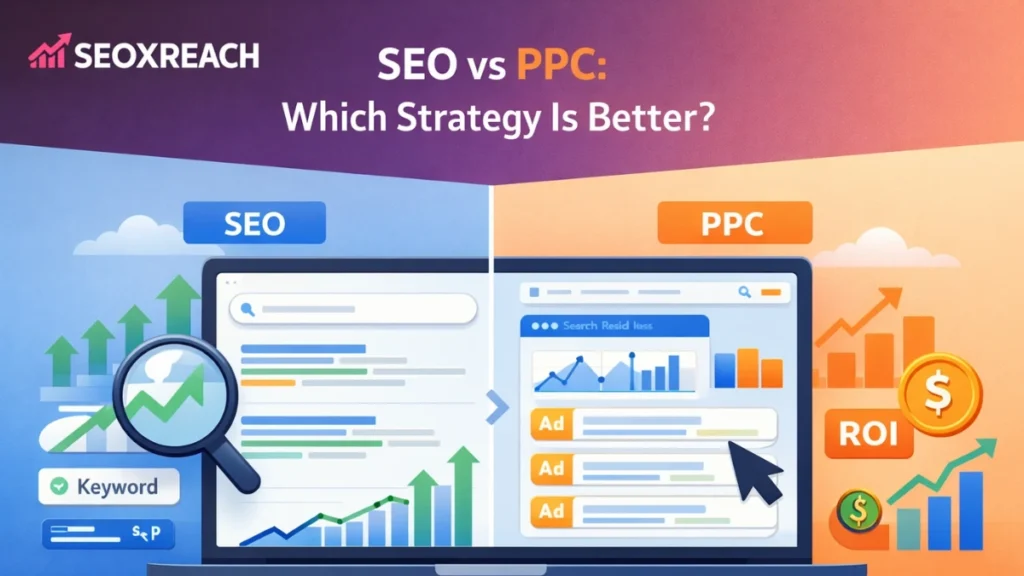
Businesses often face a key decision when planning digital growth: SEO vs PPC. Both strategies help brands appear in search results and attract potential customers.
However, they work in very different ways.
While SEO focuses on earning organic visibility over time, PPC delivers immediate traffic through paid ads.
Therefore, understanding when to use each approach can help companies invest their marketing budgets more effectively.
This guide explains the differences, advantages, and practical use cases of SEO and PPC so you can choose the strategy that fits your goals.
What is SEO and How Does it Work?
Search Engine Optimization (SEO) improves a website’s visibility in organic search results.
Instead of paying for clicks, businesses optimize their websites so search engines rank them higher for relevant keywords.
SEO typically involves three core areas:
1. Technical Optimization
A technically sound website helps search engines crawl and index pages properly.
Key elements include:
-
Fast page speed
-
Mobile responsiveness
-
Secure HTTPS connections
-
Structured data markup
Without strong technical foundations, even great content struggles to rank.
2. Content and Keyword Strategy
Content helps search engines understand a page’s relevance to search queries.
Effective SEO content includes:
-
Informational blog posts
-
Optimized landing pages
-
Problem-solving guides
-
Internal linking between pages
For example, a well-written article targeting “SEO vs PPC” can attract business owners researching marketing strategies.
3. Authority and Backlinks
Search engines also evaluate a website’s credibility.
Backlinks from trusted websites act as signals that a page provides valuable information.
Therefore, businesses often invest in:
-
Digital PR
-
Guest articles
-
Industry partnerships
Over time, this improves domain authority and rankings.
What Is PPC Advertising?
Pay-Per-Click (PPC) advertising allows businesses to place paid ads at the top of search engine results.
Instead of waiting for rankings, companies bid on keywords and pay when users click the ad.
PPC campaigns typically run through platforms like search advertising networks or social media ad systems.
Key Components of PPC Campaigns
A successful campaign requires more than simply launching ads.
Important elements include:
-
Keyword bidding strategies
-
Ad copy optimization
-
Landing page design
-
Conversion tracking
Because PPC traffic costs money, continuous testing and optimization are essential.
SEO vs PPC: Key Differences Businesses Should Understand
Although both strategies target search users, their outcomes differ significantly.
1. Speed of Results
PPC delivers immediate visibility.
Once a campaign launches, ads can appear in search results within hours.
SEO, on the other hand, requires patience.
Most websites see meaningful ranking improvements after several months of consistent optimization.
2. Long-Term Value
SEO builds sustainable traffic.
Once pages rank well, they can generate visitors without paying for every click.
PPC stops generating traffic when the ad budget runs out.
Therefore, businesses often view SEO as a long-term investment.
3. Cost Structure
PPC requires ongoing spending.
Every click has a cost, and competitive keywords can become expensive quickly.
SEO involves upfront investment in content, technical optimization, and link building.
However, organic traffic does not incur a cost per visitor.
4. Credibility and Trust
Many users trust organic search results more than paid ads.
Ranking organically can therefore improve brand credibility.
However, paid ads still capture attention, especially for commercial search queries.
When SEO is the Better Strategy
SEO works best for businesses that want sustainable growth.
It is particularly effective when companies:
-
Aim to build long-term authority in their industry
-
Want consistent organic traffic
-
Target informational search queries
-
Produce helpful, high-quality content regularly
For example, educational blog posts, comparison guides, and tutorials perform well in organic search.
Although results take time, SEO often generates strong long-term ROI.
When PPC Makes More Sense
PPC is useful when businesses need immediate visibility.
It is often the right choice when companies:
-
Launch new products or services
-
Run limited-time promotions
-
Test keyword demand quickly
-
Compete in highly commercial search queries
Because campaigns can be adjusted quickly, PPC also provides valuable data about user behavior and conversion rates.
Why Many Businesses Use SEO and PPC Together
In reality, SEO vs PPC is not always an either-or decision.
Many companies achieve the best results by combining both strategies.
For example:
-
PPC generates traffic quickly while SEO builds long-term rankings.
-
Paid campaigns help identify high-converting keywords.
-
SEO content reduces long-term customer acquisition costs.
This balanced approach often improves overall search visibility.
Practical Framework for Choosing Between SEO and PPC
When deciding which strategy to prioritize, businesses should evaluate three factors:
1. Budget
If marketing budgets are limited, SEO can provide better long-term value.
However, PPC requires consistent funding to maintain visibility.
2. Timeline
Companies seeking quick leads may benefit from PPC.
Meanwhile, businesses with longer growth timelines should invest in SEO.
3. Competition
Highly competitive keywords may require a mix of both strategies.
SEO builds authority over time, while PPC captures immediate opportunities.
Many experienced agencies recommend testing both channels before scaling investment.
Final Thoughts on SEO vs PPC
Choosing between SEO vs PPC depends on your business goals, budget, and growth timeline.
SEO focuses on building long-term visibility and authority.
PPC delivers immediate traffic and rapid testing opportunities.
For most companies, the smartest strategy is not choosing one over the other but integrating both into a balanced search marketing plan.
Experienced agencies such as SEOXREACH often help businesses identify the right mix of organic optimization and paid campaigns based on real search data and market competition.