
How Long Does SEO Take to Show Results?
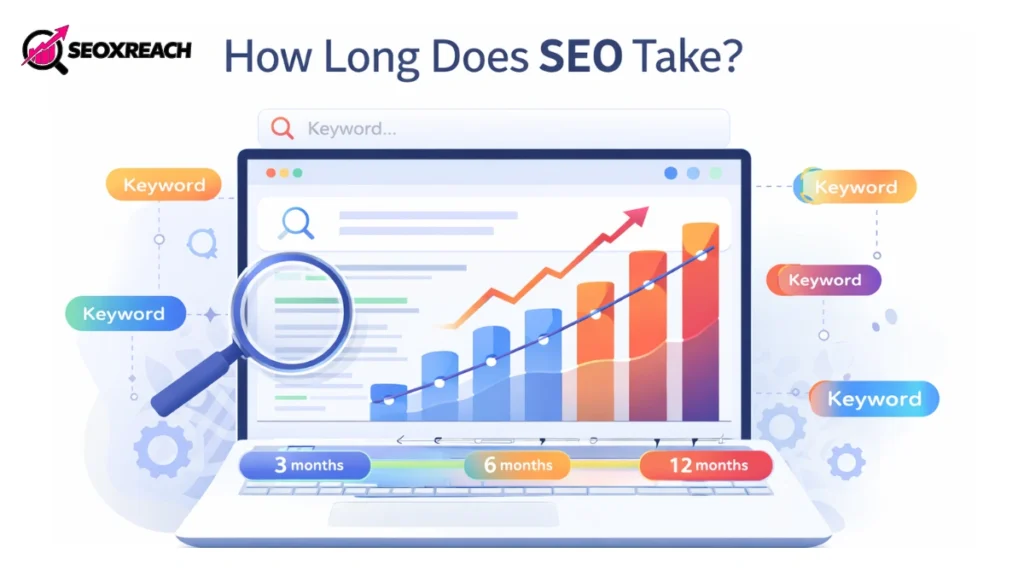
One of the most common questions businesses ask is: how long does SEO take to deliver measurable results?
The short answer is that SEO is not instant.
Unlike paid ads, organic growth requires time, consistency, and strategic execution.
However, with the right approach, SEO can deliver sustainable traffic and long-term business growth.
This guide explains realistic SEO timelines, key influencing factors, and how to speed up results without risking penalties.
How Long Does SEO Take in Reality?
SEO typically takes 3 to 6 months to show initial improvements.
However, competitive industries may require 6 to 12 months or longer to achieve strong rankings.
That said, timelines vary depending on several factors, including competition, website history, and content quality.
Therefore, instead of expecting instant results, businesses should focus on steady progress and long-term gains.
Why SEO Takes Time to Work
Search engines aim to provide users with the most relevant and trustworthy results.
Because of this, they evaluate multiple signals before ranking a website.
1. Search Engine Crawling and Indexing
Before ranking content, search engines must first:
-
Discover your website
-
Crawl your pages
-
Index your content
This process alone can take days or weeks, especially for new websites.
2. Trust and Authority Building
New websites start with low authority.
Therefore, search engines need time to evaluate:
-
Backlink quality
-
Content relevance
-
User engagement signals
Building authority naturally takes consistent effort over time.
3. Competition in Your Industry
Highly competitive niches take longer to rank.
For example:
-
Finance
-
SaaS
-
Healthcare
-
Digital marketing
In these industries, established competitors already dominate search results.
SEO Timeline Breakdown: Month-by-Month
Understanding what happens during each stage helps set realistic expectations.
Month 1-2: Foundation and Audit
At this stage, the focus is on building a strong base.
Key activities include:
-
Technical SEO audit
-
Keyword research
-
Competitor analysis
-
Fixing website issues
Although rankings may not improve yet, this phase is critical.
Month 3-4: Content and Optimization
Next, businesses begin publishing optimized content.
This includes:
-
Blog articles
-
Landing pages
-
On-page SEO improvements
Some keywords may start ranking, especially low-competition terms.
Month 5-6: Traffic Growth
At this point, early results become visible.
You may notice:
-
Increased impressions
-
Gradual traffic growth
-
Initial keyword rankings
However, major competitive keywords may still take time.
Month 6-12: Authority and Scaling
Now, SEO efforts begin compounding.
With consistent work:
-
Rankings improve significantly
-
Organic traffic increases
-
Leads and conversions grow
This phase delivers the strongest ROI.
Key Factors That Affect SEO Speed
Not all websites follow the same timeline.
Several factors can accelerate or slow down SEO progress.
1. Website Age and History
Older domains often rank faster because they already have some authority.
New websites, however, require more time to build trust.
2. Content Quality
High-quality, helpful content ranks faster.
Search engines prioritize content that:
-
Solves user problems
-
Answers search intent clearly
-
Provides real value
Thin or duplicate content delays results.
3. Backlink Profile
Strong backlinks improve credibility.
However, low-quality or spammy links can harm rankings.
Therefore, businesses should focus on earning links from relevant and trusted sources.
4. Technical SEO Health
A poorly optimized website slows down SEO performance.
Common issues include:
-
Slow loading speed
-
Broken links
-
Poor mobile usability
Fixing these improves crawlability and rankings.
Can You Speed Up SEO Results?
Although SEO takes time, you can accelerate progress with the right strategies.
Focus on Low-Competition Keywords
Targeting less competitive keywords helps you rank faster.
These keywords often:
-
Have lower search volume
-
Are more specific
-
Convert better
Publish Consistently
Regular content updates signal activity to search engines.
For example:
-
Weekly blog posts
-
Updated landing pages
-
Fresh content additions
Consistency improves visibility over time.
Improve Internal Linking
Internal links help search engines understand your website structure.
They also:
-
Distribute authority across pages
-
Improve user navigation
-
Boost rankings for key pages
Optimize for User Experience
Search engines prioritize user satisfaction.
Therefore, improving:
-
Page speed
-
Mobile experience
-
Content readability
can positively impact rankings.
Common SEO Mistakes That Delay Results
Many businesses unknowingly slow down their SEO progress.
Avoid these common issues:
-
Expecting instant results
-
Ignoring technical SEO
-
Publishing low-quality content
-
Targeting overly competitive keywords too early
-
Inconsistent optimization efforts
SEO requires patience and a strategic approach.
How to Measure SEO Progress
Even before rankings improve, you can track early signals of success.
Important metrics include:
-
Organic impressions
-
Keyword rankings
-
Website traffic
-
Click-through rates
-
Engagement metrics
These indicators show that your SEO strategy is moving in the right direction.
Final Thoughts on How Long Does SEO Take
So, how long does SEO take to deliver results?
In most cases, businesses start seeing progress within 3 to 6 months, while significant growth occurs over 6 to 12 months.
SEO is not a quick fix. Instead, it is a long-term investment that builds sustainable visibility and trust.
Companies that stay consistent, focus on quality, and follow proven strategies often achieve the best outcomes.
For businesses looking to accelerate results while maintaining compliance with search engine guidelines, working with experienced teams like SEOXREACH can help align strategy, execution, and long-term growth.