
Ultimate Guide on Technical SEO Checklist for 2026
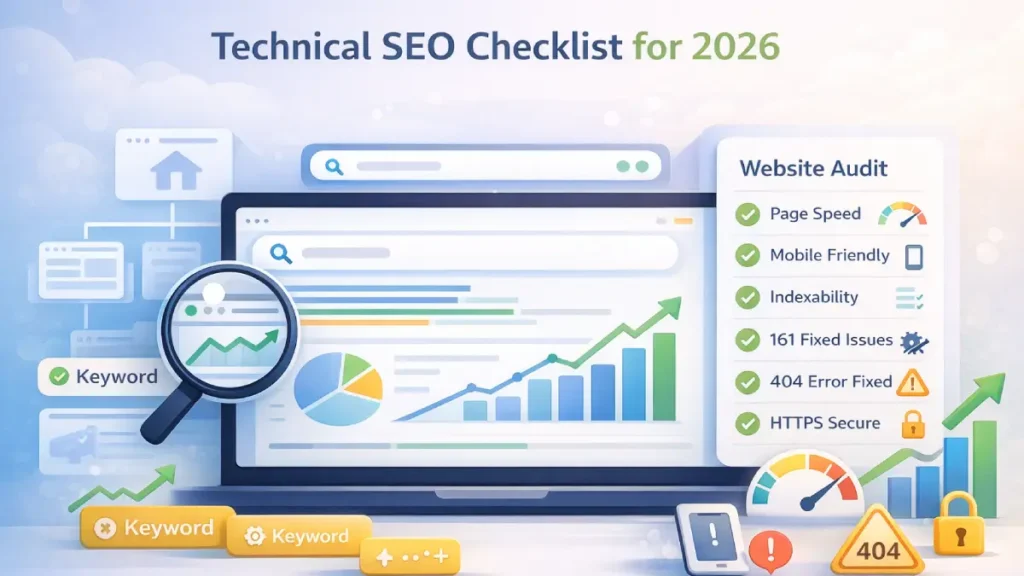
A strong Technical SEO checklist is essential for any website that wants to rank consistently in search results.
While content and backlinks drive visibility, technical SEO ensures that search engines can properly crawl, index, and understand your website.
As search algorithms evolve in 2026, technical optimization has become more important than ever.
This guide covers a practical, up-to-date checklist to help businesses improve performance, user experience, and search rankings.
What is Technical SEO?
Technical SEO focuses on optimizing the backend structure of a website.
It ensures that search engines can:
-
Crawl your pages efficiently
-
Index content correctly
-
Understand your site architecture
Without proper technical SEO, even high-quality content may struggle to rank.
Technical SEO Checklist for 2026
Below is a structured checklist covering the most critical technical SEO areas.
Website Crawling and Indexing
Search engines must access your pages before ranking them.
Therefore, start with these essentials:
-
Ensure your XML sitemap is updated and submitted
-
Check robots.txt for blocked important pages
-
Fix crawl errors in search console
-
Use proper canonical tags to avoid duplication
Additionally, regularly audit indexed pages to ensure accuracy.
Site Speed and Core Web Vitals
Page speed directly impacts both rankings and user experience.
Focus on improving:
-
Largest Contentful Paint (LCP)
-
Interaction to Next Paint (INP)
-
Cumulative Layout Shift (CLS)
To optimize performance:
-
Compress images
-
Use a content delivery network (CDN)
-
Minimize JavaScript and CSS
Faster websites not only rank better but also reduce bounce rates.
Mobile-First Optimization
Search engines prioritize mobile versions of websites.
Therefore, ensure your site is:
-
Fully responsive across devices
-
Easy to navigate on smaller screens
-
Free from intrusive pop-ups
A mobile-friendly experience improves both rankings and conversions.
URL Structure and Site Architecture
Clean and organized URLs help search engines understand your content.
Best practices include:
-
Use short, descriptive URLs
-
Avoid unnecessary parameters
-
Maintain a logical folder structure
Additionally, create a clear site hierarchy with proper internal linking.
Structured Data and Schema Markup
Structured data helps search engines interpret your content better.
Implement schema markup for:
-
Articles
-
Products
-
FAQs
-
Reviews
As a result, your website may qualify for rich results, improving visibility.
HTTPS and Website Security
Security remains a ranking factor.
Ensure your website:
-
Uses HTTPS encryption
-
Has a valid SSL certificate
-
Avoids mixed content issues
Secure websites build trust with both users and search engines.
Fix Broken Links and Errors
Broken links negatively impact user experience and SEO.
Therefore, regularly:
-
Identify 404 errors
-
Fix or redirect broken URLs
-
Monitor server errors
Maintaining a clean site improves crawl efficiency.
Optimize Internal Linking
Internal links guide both users and search engines.
A strong linking strategy helps:
-
Distribute page authority
-
Improve navigation
-
Increase page indexing
Use relevant anchor text and link important pages frequently.
Duplicate Content Management
Duplicate content confuses search engines.
To prevent issues:
-
Use canonical tags correctly
-
Avoid duplicate meta tags
-
Consolidate similar pages
This ensures search engines index the right version of your content.
Log File Analysis
Log file analysis provides insights into search engine behavior.
It helps you understand:
-
Crawl frequency
-
Important pages for bots
-
Crawl budget usage
Although often overlooked, this is a powerful technical SEO practice.
Advanced Technical SEO Trends in 2026
SEO continues to evolve with technology.
Here are key trends to watch:
AI and Search Engine Understanding
Search engines now better understand context and intent.
Therefore, technical SEO must support:
-
Structured content
-
Clear site architecture
-
Semantic HTML
JavaScript SEO
Modern websites rely heavily on JavaScript.
Ensure that:
-
Important content is crawlable
-
Rendering issues are minimized
-
Lazy loading does not block indexing
Voice and Visual Search Optimization
Search behavior is changing.
To stay ahead:
-
Optimize for conversational queries
-
Use descriptive alt text for images
-
Structure content for featured snippets
Common Technical SEO Mistakes to Avoid
Even well-designed websites can face technical issues.
Avoid these common mistakes:
-
Blocking important pages via robots.txt
-
Ignoring mobile optimization
-
Slow loading speeds
-
Missing structured data
-
Poor internal linking
Regular audits help identify and fix these problems early.
How Often Should You Run a Technical SEO Audit?
Technical SEO is not a one-time task.
Instead, businesses should:
-
Perform audits every 3–6 months
-
Monitor performance regularly
-
Fix issues as they arise
Consistent maintenance ensures long-term SEO success.
Final Thoughts on Technical SEO Checklist
A well-implemented Technical SEO checklist lays the foundation for strong search performance.
It ensures that your website is fast, accessible, and easy for search engines to understand.
While content and backlinks drive growth, technical SEO enables them to perform effectively.
Businesses that invest in regular audits and continuous optimization often see better rankings and user engagement.
For companies seeking expert guidance, teams like SEOXREACH can help align technical improvements with broader SEO strategies for sustainable growth.