
SEO for Small Businesses Growth Guide
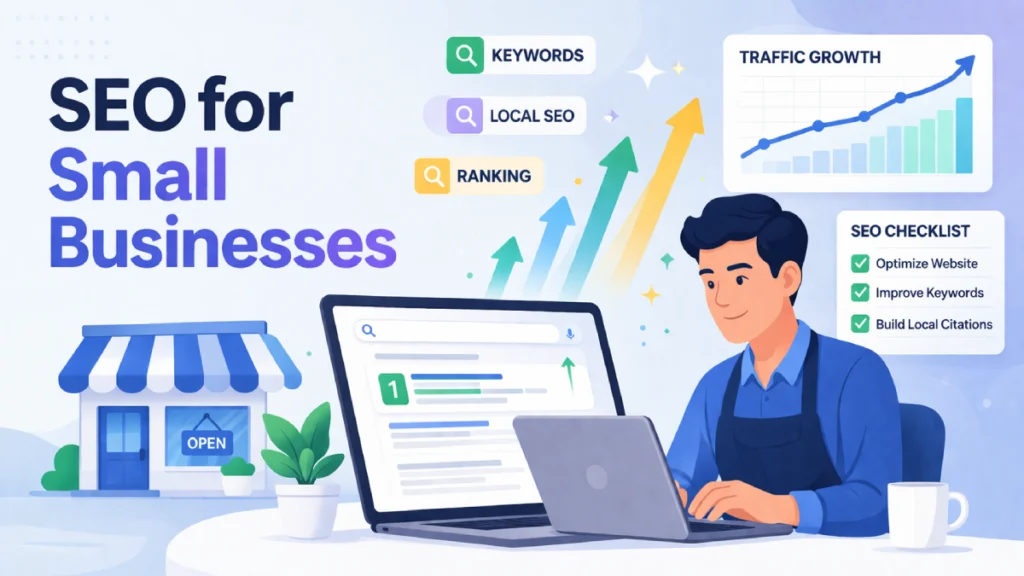
If you’re a small business owner, investing in SEO for small businesses can be one of the most cost-effective ways to grow online. Unlike paid ads, SEO helps you attract consistent traffic without paying for every click. However, success requires a clear strategy, not guesswork.
This guide explains practical steps to help small businesses improve visibility, generate leads, and compete effectively.
Why SEO Matters for Small Businesses
Small businesses often compete with larger brands that have bigger budgets. Therefore, SEO provides a level playing field.
With the right approach, you can:
- Reach local and targeted customers
- Build trust and credibility
- Generate consistent leads
- Reduce dependency on paid ads
Even with limited resources, SEO can deliver long-term results.
How SEO Works for Small Businesses
SEO helps your website appear in search results when users look for relevant services. It involves three main components:
1. On-Page SEO
This focuses on optimizing your website content. Key elements include:
- Keyword usage
- Meta tags
- Content quality
- Internal linking
Well-optimized pages improve relevance and rankings.
2. Technical SEO
Technical SEO ensures your website performs well. It includes:
- Fast loading speed
- Mobile optimization
- Secure HTTPS
- Proper site structure
Without technical optimization, rankings suffer.
3. Off-Page SEO
Off-page SEO builds your website’s authority. This involves:
- Backlink building
- Online mentions
- Local citations
Strong authority signals improve trust and visibility.
Step-by-Step SEO for Small Businesses Strategy
Start with Keyword Research
Keyword research helps you understand what customers are searching for. Focus on:
- Local keywords
- Long-tail keywords
- Low-competition phrases
For example, “bakery in NYC” targets a specific audience.
Optimize Your Website Pages
Each page should target a specific keyword. Best practices include:
- Using keywords naturally in headings
- Writing clear and helpful content
- Adding internal links
- Optimizing images
This improves both user experience and rankings.
Create Valuable Content
Content is essential for SEO success. You can create:
- Blog posts
- How-to guides
- FAQs
- Service pages
Helpful content attracts traffic and builds authority.
Focus on Local SEO
Local SEO is especially important for small businesses. Key actions include:
- Optimizing Google Business Profile
- Collecting customer reviews
- Building local citations
- Using location-based keywords
This helps you appear in local search results.
Build High-Quality Backlinks
Backlinks improve your credibility. You can earn links from:
- Local directories
- Industry blogs
- Partnerships
Focus on quality rather than quantity.
Improve Website Experience
User experience directly impacts SEO. Ensure your website:
- Loads quickly
- Works well on mobile
- Is easy to navigate
A better experience leads to higher conversions.
Common SEO Mistakes Small Businesses Should Avoid
Avoid these mistakes to improve results:
- Ignoring keyword research
- Publishing low-quality content
- Not optimizing for mobile
- Inconsistent business information
- Expecting quick results
SEO requires consistency and patience.
How Long Does SEO Take for Small Businesses?
Most small businesses start seeing results within 3 to 6 months. However, competitive markets may take longer.
Consistency, content quality, and optimization efforts determine success.
Budget-Friendly SEO Tips for Small Businesses
If you have limited resources, focus on high-impact actions:
- Target low-competition keywords
- Optimize existing content
- Use free SEO tools
- Build local listings
- Create consistent blog content
These strategies deliver strong results without high costs.
Practical SEO Framework for Small Businesses
Follow this simple framework:
- Research keywords
- Optimize website pages
- Publish valuable content
- Build backlinks
- Track and improve performance
Consistency is key to growth.
Final Thoughts on SEO for Small Businesses
Investing in SEO for small businesses helps you build a sustainable online presence.
By focusing on local visibility, content quality, and user experience, small businesses can compete effectively—even against larger brands.
Although results take time, SEO delivers long-term value and consistent growth.
For businesses looking to accelerate results, working with experienced teams like SEOXREACH can help implement strategies tailored to your goals and market.
FAQs
Is SEO worth it for small businesses?
Yes, SEO provides long-term traffic, leads, and brand visibility at a lower cost compared to paid ads.
Can I do SEO myself?
Yes, small businesses can start with basic SEO, but expert guidance can improve results.
What is the most important SEO factor?
Content quality, relevance, and user experience are the most important factors.