
How Google Ranking Algorithm Works (2026 Guide)
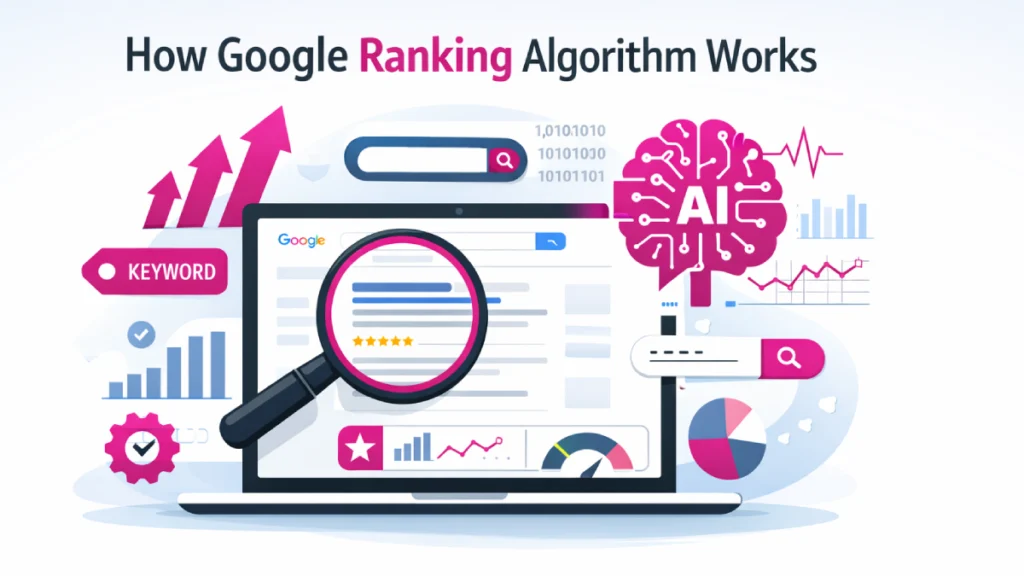
Understanding the Google ranking algorithm is essential for any business aiming to improve search visibility. Google processes billions of searches daily. To deliver the best results, it uses complex systems that evaluate content quality, relevance, and user experience. However, the algorithm is not a single system, it is a combination of multiple ranking signals working together.
This guide breaks down how it works and how you can optimize your website accordingly.
What is the Google Ranking Algorithm?
The Google ranking algorithm is a system that determines which pages appear in search results and in what order. It evaluates web pages based on hundreds of factors. These include:
- Content relevance
- Website authority
- User experience
- Technical performance
The goal is to provide users with the most helpful and accurate results.
How the Google Ranking Algorithm Works
Google follows a multi-step process to rank content.
Crawling
Google discovers new and updated pages through crawling. It uses bots (also known as spiders) to scan websites and follow links. If your site is not crawlable, it cannot rank.
Indexing
After crawling, Google stores and organizes content in its index.
This step involves:
- Understanding page content
- Analyzing keywords
- Evaluating structure
Only indexed pages can appear in search results.
Ranking
Finally, Google ranks pages based on relevance and quality. It matches user queries with the most appropriate content.
Therefore, optimization must focus on both relevance and authority.
Key Ranking Factors in 2026
Although Google uses many signals, some factors have a stronger impact.
Content Quality and Relevance
High-quality content remains the most important factor. Your content should:
- Answer user queries clearly
- Provide in-depth information
- Match search intent
Content that solves problems performs better.
Backlinks and Authority
Backlinks act as trust signals. Websites with strong backlink profiles often rank higher.
However, quality matters more than quantity.
User Experience (UX)
Google prioritizes user satisfaction. Important UX signals include:
- Page speed
- Mobile usability
- Easy navigation
A positive experience improves rankings.
Core Web Vitals
Core Web Vitals measure website performance. They include:
- Loading speed
- Interactivity
- Visual stability
Optimizing these metrics improves both SEO and user experience.
Search Intent Matching
Understanding user intent is critical. There are three main types:
- Informational
- Navigational
- Transactional
Content must align with the user’s goal to rank well.
Role of AI in Google Ranking
Google increasingly uses AI to improve search results. AI systems help:
- Understand natural language
- Interpret context
- Deliver personalized results
Therefore, content must be written for users, not just keywords.
How Google Algorithm Updates Impact Rankings
Google frequently updates its algorithm. These updates aim to:
- Improve search quality
- Reduce spam
- Reward helpful content
Websites that follow best practices usually benefit from updates. However, poor-quality sites may lose rankings.
Practical SEO Strategies Based on the Algorithm
To align with the Google ranking algorithm, follow these strategies:
Focus on Helpful Content
Create content that genuinely helps users.
Avoid:
- Thin content
- Keyword stuffing
- Duplicate pages
Quality always wins.
Build Authority Gradually
Earn backlinks from trusted sources. Focus on:
- Relevance
- Credibility
- Natural link growth
This strengthens your domain authority.
Optimize Technical SEO
Ensure your website is technically sound. Key areas include:
- Fast loading speed
- Mobile optimization
- Clean site structure
Technical issues can limit rankings.
Improve Engagement Signals
User behavior influences rankings. Improve engagement by:
- Writing clear content
- Using visuals
- Adding internal links
Better engagement leads to better performance.
Common Misconceptions About Google Rankings
Many businesses misunderstand how rankings work. Avoid these myths:
- SEO delivers instant results
- More keywords mean better rankings
- Backlinks alone guarantee success
- Algorithm updates always harm rankings
Understanding the reality helps you build better strategies.
How Long Does It Take to Rank on Google?
SEO results typically take 3 to 6 months to show improvement. However, competitive niches may take longer. Consistency and quality determine success.
Final Thoughts on Google Ranking Algorithm
The Google ranking algorithm is complex, but its goal is simple: deliver the best results to users. By focusing on content quality, user experience, and authority, businesses can improve their rankings over time. SEO is not about shortcuts, it’s about aligning with how search engines evaluate value.
For businesses looking to stay ahead of algorithm changes, working with experienced teams like SEOXREACH can help implement strategies that adapt to evolving search trends.
FAQs
How many ranking factors does Google use?
Google uses hundreds of ranking signals, but content quality, backlinks, and user experience are the most important.
Does Google use AI in ranking?
Yes, AI helps Google understand search intent and deliver better results.
Can I rank without backlinks?
It is possible for low-competition keywords, but backlinks significantly improve ranking potential.