
B2B Lead Generation SEO Tactics
October 22, 2026
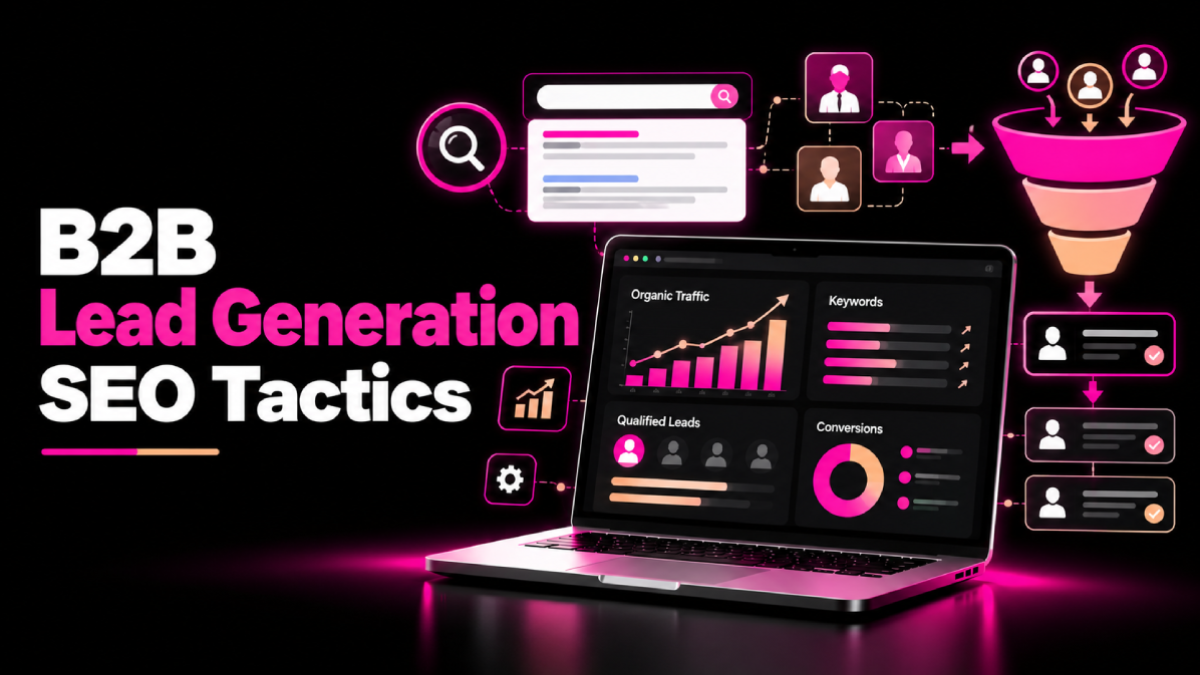
B2B companies often face a common marketing challenge: attracting website visitors is one thing, but turning those visitors into qualified sales opportunities is another. A high-traffic website can still struggle to generate leads if it targets the wrong audience or fails to address buyers’ needs.
The right B2B lead generation SEO tactics help businesses reach decision-makers who are actively researching solutions, comparing providers, and evaluating potential partners.
Unlike strategies focused only on traffic, B2B SEO should connect search intent with your sales process. That means choosing commercially relevant keywords, creating useful content, building trust, and making it easy for potential customers to take the next step.
In this guide, you’ll learn seven practical tactics to attract relevant prospects, improve organic visibility, and turn search traffic into qualified B2B leads.
1. Target Keywords That Reveal Buying Intent
Effective B2B keyword research starts with understanding what your ideal customers need and where they are in the buying process.
A business researching a problem may not be ready to contact a provider. However, someone comparing software, agencies, or service packages may be much closer to making a decision.
Organize your keywords into three groups:
- Problem-aware: “How to improve B2B lead generation”
- Solution-aware: “SEO strategies for B2B companies”
- Provider-aware: “B2B SEO agency” or “enterprise SEO services”
Use keyword research tools, competitor analysis, sales conversations, and Google Search Console to discover relevant searches.
Then assign each keyword group to the most suitable page. Informational searches may need educational guides, while commercial searches often need detailed service pages, comparisons, or case studies.
Do not judge keywords by search volume alone. A specific query with modest demand may attract more qualified prospects than a broad keyword with a much larger audience.
2. Build a Content Strategy Around Your Ideal Customer Profile
Before publishing content, define your ideal customer profile (ICP). Identify the industries you serve, company sizes you target, common challenges, buying roles, and problems your services solve.
For example, a B2B SEO agency targeting SaaS companies may need content about organic customer acquisition, product-led growth, technical SEO, and reducing dependence on paid advertising.
Create content for different stages of the buying journey:
- Awareness: Educational guides that explain business problems.
- Consideration: Comparison articles, solution guides, and implementation frameworks.
- Decision: Service pages, case studies, pricing information, and consultation options.
Connect related articles to relevant service pages so readers can move naturally from learning about a problem to evaluating a solution.
Google’s people-first content guidance recommends creating useful, original content for an intended audience rather than publishing pages primarily to manipulate rankings.
3. Optimize Service Pages for Qualified Leads
Your service pages often play a direct role in converting search visitors into enquiries. They should explain what you offer, who benefits, and why a potential customer should consider your business.
Improve each priority page with:
- A clear headline describing the service and its business value.
- Specific details about your process and deliverables.
- Relevant customer challenges and use cases.
- Evidence such as genuine case studies, testimonials, or documented results.
- Answers to common objections and implementation questions.
- A clear call to action, such as requesting an audit or booking a consultation.
For example, a company looking for technical SEO support needs more than a list of keywords. It needs to understand the problems you solve, the work involved, and how you measure progress.
Review SEOXREACH’s SEO services as an example of a service-focused destination that connects SEO capabilities with business goals.
4. Create High-Value Content That Builds Buyer Confidence
B2B purchasing decisions often involve several stakeholders and a longer evaluation process. Your content should help buyers understand their options and justify their decisions internally.
Create resources that answer practical questions, such as:
- How should a business evaluate competing solutions?
- What does implementation involve?
- Which risks should buyers consider?
- What resources or budget might the project require?
- How can a company measure success?
Useful formats include comparison guides, detailed tutorials, industry-specific landing pages, original research, and case studies.
Whenever possible, support your recommendations with real examples, credible references, and transparent explanations. Avoid inventing customer results or presenting unsupported statistics as facts.
For more ideas on attracting search visitors, connect your content strategy with SEOXREACH’s guide to proven ways to boost organic traffic.
5. Strengthen Technical SEO and Internal Linking
A strong content strategy needs a technically sound website. Search engines must be able to discover and process important pages before those pages can compete in organic results.
Review indexing, crawlability, XML sitemaps, canonical tags, broken links, mobile usability, and page performance.
Next, strengthen your internal linking structure. Link relevant educational articles to supporting resources and commercial pages using descriptive anchor text.
For example, an article about organic lead generation could link to a guide on ranking in Google and AI search when discussing search visibility.
For larger websites, a logical page hierarchy can help visitors and search engines navigate related topics. SEOXREACH’s site architecture SEO services cover this area of optimization.
6. Earn Relevant Backlinks and Demonstrate Expertise
Relevant backlinks can help potential customers discover your business and provide useful context about your content. However, focus on genuine editorial references rather than accumulating links simply to increase a metric.
Build link-worthy resources such as original industry research, practical templates, expert commentary, and detailed guides.
You can also develop relationships with relevant industry publications, professional associations, technology partners, and complementary businesses.
At the same time, strengthen trust on your website. Include accurate author information, genuine testimonials, transparent service descriptions, and verifiable examples of your work.
Avoid paid link schemes and fabricated proof. Credibility matters when buyers evaluate whether your company can solve an important business problem.
7. Convert Organic Visitors Into Qualified Leads
Even relevant organic traffic may produce few enquiries if visitors cannot identify the next step.
Design conversion paths around the level of commitment a visitor is ready to make.
For early-stage visitors, offer a useful checklist, template, or educational resource. For prospects comparing providers, offer a detailed service guide or relevant case study. For buyers ready to act, make consultation requests and enquiry forms easy to find.
Improve conversion performance by:
- Using clear, specific calls to action.
- Keeping forms focused on essential qualification details.
- Explaining what happens after a visitor submits a form.
- Displaying relevant proof near important conversion points.
- Ensuring the website works well on mobile devices.
- Testing meaningful changes rather than redesigning pages without evidence.
Track organic form submissions, qualified leads, sales opportunities, and revenue where possible. Connect analytics with your CRM to understand which landing pages and search queries contribute to actual business results.
How to Measure B2B SEO Lead Generation
Use Google Search Console to review search queries, impressions, clicks, and landing-page performance. Then use analytics and CRM data to evaluate what happens after visitors arrive.
Track these key metrics:
- Organic traffic from relevant business audiences.
- Conversion rate on important landing pages.
- Marketing-qualified leads and sales-qualified leads.
- Lead-to-opportunity and opportunity-to-customer rates.
- Cost per qualified lead where comparable costs are available.
- Pipeline and revenue influenced by organic search.
Do not rely on traffic growth alone. A smaller number of well-qualified prospects can create more business value than a large volume of irrelevant visitors.
Conclusion
Successful B2B lead generation SEO requires more than attracting visitors. It involves reaching the right decision-makers, answering their questions, building confidence, and creating a clear path from search to sales.
Start by targeting buyer-intent keywords, building content around your ideal customer profile, and improving your most important service pages. Then strengthen technical SEO, earn relevant backlinks, and measure the leads and opportunities your efforts generate.
When you align SEO with your sales process, your website can become a more valuable channel for attracting qualified prospects and supporting sustainable business growth.
FAQs About B2B Lead Generation SEO Tactics
Quick answers related to this guide, and how SEOXREACH can help you apply them.
B2B lead generation SEO uses search engine optimization to attract relevant business buyers and encourage them to take meaningful actions, such as requesting a consultation, booking a demo, or contacting a sales team.
The best keywords reflect your audience's needs and buying intent. Service, solution, comparison, and industry-specific searches can attract qualified prospects when they match your offerings.
There is no guaranteed timeline. Results depend on competition, website condition, content quality, search demand, and the buying cycle. Monitor qualified enquiries and sales opportunities over time.
No. Blogging can attract and educate prospects, but it works best alongside optimized service pages, relevant internal links, clear conversion paths, and lead tracking.
Measure organic visibility alongside qualified leads, sales opportunities, conversion rates, and pipeline contribution. Rankings and clicks are useful indicators, but they do not fully capture business outcomes.
Yes. Smaller businesses can focus on specific industries, specialized services, and detailed customer problems. Relevant expertise and useful content can help them compete for targeted searches, although rankings are never guaranteed.
Ready to Grow Organically?
Get a custom SEO strategy to increase your traffic, leads and revenue with SEOXREACH.
Get a Free SEO Audit →- More Traffic
- Higher Rankings
- Increase Revenue