
Meta Ads vs. Google Ads for Your Business
November 4, 2026
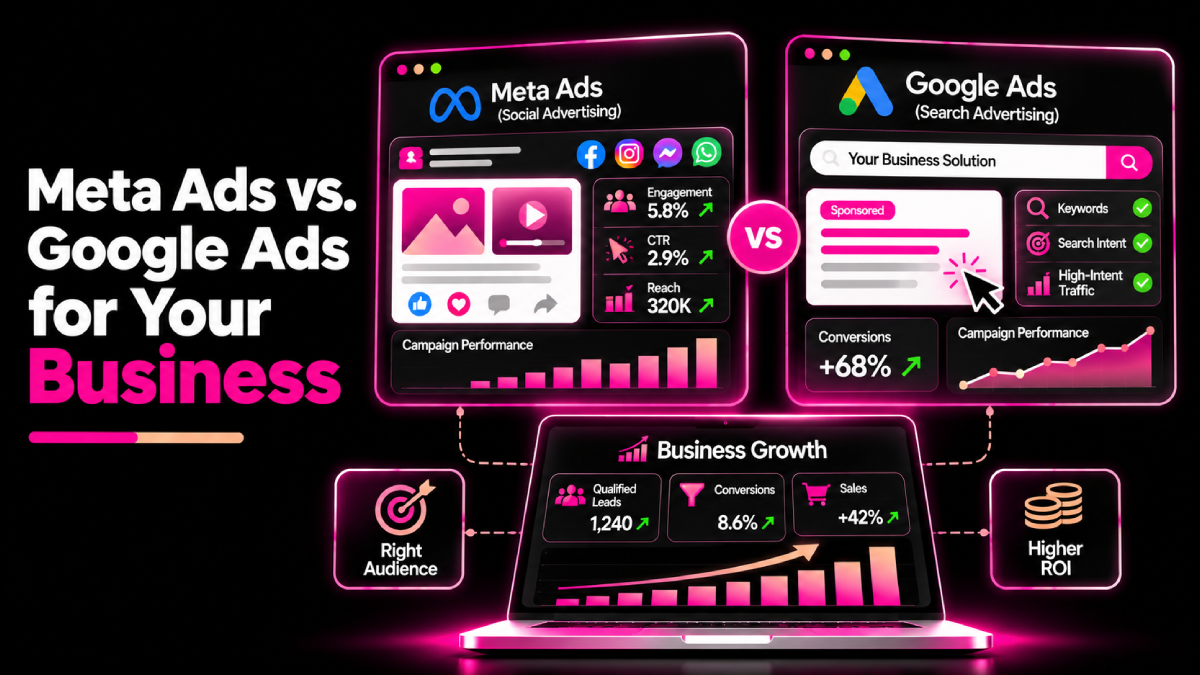
Choosing the right advertising platform can make a significant difference to your marketing results. Some customers search Google when they need a solution, while others discover new products and services while scrolling through social media.
Understanding Meta Ads vs. Google Ads for Your Business helps you decide where to invest your advertising budget, how to reach potential customers, and which platform best supports your growth goals.
Both platforms offer powerful targeting and measurement tools. However, they serve different purposes. Google Ads often helps businesses reach people actively searching for products or services, while Meta Ads helps businesses reach audiences through discovery, interests, and social engagement.
In this guide, you will learn how the platforms compare and how to choose the right strategy for your business.
What Are Meta Ads and Google Ads?
Meta Ads lets businesses advertise across eligible placements on Facebook, Instagram, Messenger, and Meta’s other supported surfaces. Advertisers can use audience signals, creative formats, and campaign objectives to reach potential customers.
Google Ads lets businesses advertise across Google Search and other eligible properties and networks. Search campaigns can connect ads with people searching for specific products, services, or information.
The key difference is how these platforms connect businesses with audiences. Google Search can capture existing demand, while Meta can help create awareness and generate interest before someone actively searches for a solution.
Key Differences Meta Ads vs. Google Ads
| Factor | Meta Ads | Google Ads |
|---|---|---|
| Main strength | Discovery and audience engagement | Capturing active search demand |
| Common placements | Facebook, Instagram, and eligible Meta placements | Google Search and other eligible networks |
| Targeting | Audience signals, interests, demographics, and campaign optimization | Keywords, search intent, audiences, and campaign signals |
| Creative formats | Images, videos, carousels, and other supported formats | Search text ads, product ads, video, and other formats |
| Common use cases | Product discovery, awareness, retargeting | High-intent searches, service enquiries, product demand |
| Key challenge | Converting attention into demand | Managing competition and search costs |
Neither platform is automatically cheaper or better. Results depend on your industry, offer, audience, creative quality, competition, and conversion process.
When Should You Choose Meta Ads?
Meta Ads can be a strong option when your business benefits from visual storytelling, audience discovery, or repeat exposure.
1. You Sell Visually Appealing Products
Fashion, beauty, home décor, gifts, and lifestyle products often benefit from compelling images and videos.
For example, an online jewelry store can use Instagram placements to introduce new collections, showcase styling ideas, and direct shoppers to product pages.
2. Your Audience Needs Inspiration
Some customers do not know which product or service they want until they see an appealing solution.
Meta campaigns can introduce your brand to relevant audiences, demonstrate product benefits, and encourage people to explore your offer.
3. You Want to Build Awareness and Retarget Visitors
Meta can help businesses reconnect with eligible audiences who previously interacted with their content or website, subject to platform rules and privacy requirements.
For example, an eCommerce brand may show a product demonstration to new audiences and later use eligible retargeting campaigns to encourage interested shoppers to return.
Meta Ads may suit your business if visual creative, audience discovery, and ongoing engagement play an important role in your customer journey.
Explore Meta’s official advertising resources to review current formats, objectives, and targeting options.
When Should You Choose Google Ads?
Google Ads is often a strong choice when potential customers already know what they need and actively search for a solution.
1. Customers Search for Your Services
Businesses such as plumbers, lawyers, consultants, marketing agencies, and specialist service providers can benefit from search campaigns targeting relevant commercial queries.
For example, a person searching for “emergency plumbing service near me” may have an immediate need. A relevant ad and useful landing page can help that person contact a suitable provider.
2. You Target High-Intent Buyers
Search terms can reveal whether users want information, comparisons, pricing, or a service provider.
A B2B company might target searches such as “enterprise CRM software pricing” or “B2B SEO agency.” These queries can indicate commercial interest, although the search itself does not guarantee that the person is ready to buy.
3. You Want to Capture Existing Demand
Google Search can help your business appear when users actively seek products or services you offer.
However, some keywords attract substantial competition, and clicks can become expensive. Use relevant keywords, negative keywords, accurate conversion tracking, and focused landing pages to control waste.
Google Ads may suit your business if customers actively search for your offering and you can convert that demand into profitable sales or qualified leads.
Review Google’s official advertising resources to explore campaign types, keyword planning, and conversion measurement.
Which Platform Is More Affordable?
There is no universal winner when comparing Meta Ads vs. Google Ads on cost.
Your actual results depend on factors such as:
- Industry and audience competition
- Target location
- Campaign objective
- Ad quality and relevance
- Landing page conversion rate
- Product margins or customer lifetime value
- Lead quality and sales conversion rate
Meta may deliver inexpensive clicks that do not convert into valuable customers. Google may deliver more expensive clicks that produce stronger purchase intent. The reverse can also happen.
Instead of comparing cost per click alone, measure cost per qualified lead, customer acquisition cost, and return on ad spend where reliable conversion-value data is available.
For lead-generation campaigns, track which enquiries become sales opportunities. For eCommerce, measure completed purchases and revenue while accounting for margins, refunds, and other relevant costs.
Can You Use Meta Ads and Google Ads Together?
Yes. Combining the platforms can help businesses reach customers at different stages of the buying journey.
For example, an online furniture retailer could:
- Use Meta Ads to introduce new collections through lifestyle images and videos.
- Use Google Search campaigns to capture searches for specific furniture products.
- Direct each campaign to relevant product or category pages.
- Measure purchases and qualified actions across both channels.
- Adjust spending based on incremental results and business profitability.
A B2B company could use Meta campaigns to distribute useful industry content and Google Ads to capture searches from prospects actively comparing service providers.
However, using both platforms does not automatically improve results. Start with the channel that best matches your business goal, then expand when you have a clear reason and enough resources to measure performance.
How to Choose the Right Advertising Platform
Use this simple decision framework:
- Choose Meta Ads first when visual discovery, audience engagement, and product awareness are central to your strategy.
- Choose Google Search Ads first when customers actively search for your products or services.
- Test both platforms when your customer journey includes discovery as well as active comparison or purchase.
- Prioritize measurement before increasing budgets on either platform.
Before launching, define your target audience, primary conversion, acceptable acquisition cost, and available test budget. Then evaluate results after collecting enough meaningful data.
For additional guidance on campaign growth, read our article on scaling your business with Google Ads.
Conclusion
The choice between Meta Ads vs. Google Ads for Your Business depends on how customers discover and evaluate your offering. Meta Ads can help create interest and reach relevant audiences, while Google Ads can capture active search demand and support purchase decisions. Start with your business goals, track meaningful conversions, and test the platform that best matches your audience. When the data supports it, combine both channels to build a more balanced and measurable advertising strategy.
FAQs About Meta Ads vs. Google Ads for Your Business
Quick answers related to this guide, and how SEOXREACH can help you apply them.
Neither platform is universally better. Meta Ads can work well for discovery and visual products, while Google Search Ads can capture active demand. Your business model and customer journey determine the best choice.
Google Ads can help service businesses reach people actively searching for local solutions. Meta Ads can help local businesses promote offers and build awareness. Choose based on customer behavior, budget, and conversion goals.
Both can support eCommerce growth. Meta Ads can introduce products through engaging creative, while Google Ads can capture product searches and shopping demand. Test performance using profitable sales rather than clicks alone.
Not necessarily. Costs vary by industry, audience, campaign objective, competition, and conversion rate. Compare qualified leads or customer acquisition costs instead of relying only on average click costs.
Yes. B2B companies can use Meta Ads for awareness, content distribution, and eligible audience campaigns. Google Search may be more suitable for capturing prospects who actively search for specific business solutions.
Set a test budget based on your cash flow, customer economics, and expected conversion costs. Start with a manageable amount, measure qualified outcomes, and scale only when the results justify additional investment.
Ready to Grow Organically?
Get a custom SEO strategy to increase your traffic, leads and revenue with SEOXREACH.
Get a Free SEO Audit →- More Traffic
- Higher Rankings
- Increase Revenue