
How to Drive Targeted Traffic to Your Website
November 13, 2026
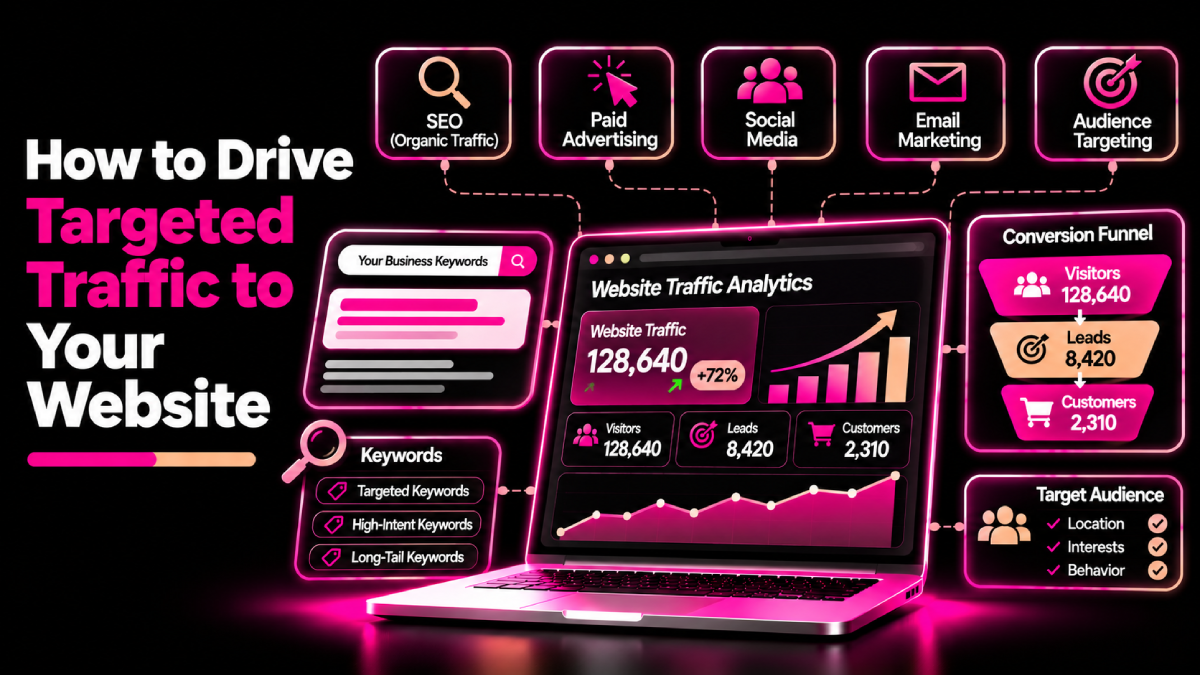
Getting thousands of website visitors sounds impressive, but traffic alone does not grow a business. What matters is attracting people who are genuinely interested in your products, services, or expertise. Learning how to drive targeted traffic to website pages helps businesses reach potential customers who are more likely to engage, enquire, and buy.
Many businesses invest in SEO, social media, and paid advertising but struggle to generate meaningful results. The problem often comes from attracting the wrong audience or sending visitors to pages that do not match their needs.
The solution is to build a traffic strategy around customer intent, relevant content, and conversion opportunities. Here are eight practical ways to attract the right visitors and turn website traffic into business growth.
1. Target High-Intent Keywords Through SEO
Search engine optimization is one of the most effective ways to attract people who are actively searching for relevant information, products, or services.
However, choosing keywords based only on search volume can lead to irrelevant traffic. Instead, focus on search intent.
Consider these keyword types:
- Informational: “How does email marketing work?”
- Commercial: “Best email marketing software”
- Transactional: “Buy email marketing software”
- Local: “Digital marketing agency near me”
Each keyword represents a different stage of the buying journey.
Start by researching relevant terms using keyword research tools. Then map each keyword to a suitable page, such as a blog article, service page, or product page.
For a stronger SEO foundation, follow Google’s SEO Starter Guide and explore SEOXREACH’s global content strategy services.
2. Publish Content That Solves Real Customer Problems
Useful content attracts visitors by answering questions your potential customers already have.
Instead of publishing articles simply to increase website activity, build content around genuine customer problems, buying questions, and industry topics.
For example, a web design agency could publish:
- How to Choose the Right Website Platform
- Website Design Mistakes That Reduce Conversions
- How Much Does a Business Website Cost?
- Essential Website Features for Small Businesses
Organize your content into three categories:
- Awareness content: Helps readers understand a problem.
- Consideration content: Compares solutions and explains available options.
- Decision content: Helps potential customers evaluate your services.
Connect relevant blog posts to service pages using natural internal links. This helps readers discover related information and understand what your business offers.
Follow Google’s people-first content guidance to keep your content useful and relevant.
3. Optimize Your Website for Search Engines
Creating good content is important, but search engines also need to discover, crawl, and understand your website.
Review these essential SEO elements:
- Write unique title tags and meta descriptions.
- Use descriptive headings and logical page structures.
- Add relevant internal links.
- Optimize images and provide descriptive alt text.
- Fix broken links and important indexing issues.
- Ensure important pages work properly on mobile devices.
- Improve page speed and usability.
Use Google Search Console to monitor search performance, indexing, and technical issues.
Also, review your website structure. Important service pages should be easy to reach from relevant navigation and content links.
For additional technical improvements, explore SEOXREACH’s site architecture SEO services.
4. Use Google Ads to Reach People With Buying Intent
SEO can build long-term organic visibility, while paid search advertising can help businesses reach people who are actively looking for specific solutions.
Google Ads allows you to target searches related to your products and services.
To attract relevant traffic:
- Choose keywords that match your business objectives.
- Separate campaigns by product, service, or audience.
- Use negative keywords to filter irrelevant searches.
- Write ads that clearly explain your offer.
- Send visitors to relevant landing pages.
- Track purchases, qualified enquiries, and other meaningful conversions.
For example, a business offering professional accounting services should direct people searching for business accounting support to a relevant service page, rather than a generic homepage.
Start with a controlled budget and review the quality of incoming leads before increasing spend.
Explore the official Google Ads platform to understand its advertising options.
5. Build a Strong Social Media Traffic Strategy
Social media can help businesses introduce their content, products, and services to relevant audiences.
However, simply posting regularly does not guarantee website visits. Your content needs a clear reason for people to click.
Use different content formats to attract attention:
- Educational posts that solve common problems
- Short videos demonstrating products or services
- Customer stories and genuine testimonials
- Industry insights and useful tips
- Product comparisons and demonstrations
- Blog highlights with links to detailed resources
Choose platforms based on where your target audience spends time. For example, LinkedIn can support B2B visibility, while Instagram and Facebook can help businesses reach consumer audiences.
Include a relevant next step in your posts. A useful guide, product page, or service explanation gives interested users a reason to visit your website.
6. Improve Website Speed and User Experience
Attracting visitors is only part of the job. Your website must also provide a smooth experience so people can explore your content and take action.
A slow or confusing website can make visitors leave before they understand your offer.
Focus on these improvements:
- Compress large images.
- Remove unnecessary scripts and plugins.
- Use clear navigation.
- Make important content easy to find.
- Improve mobile layouts.
- Use readable fonts and appropriate spacing.
- Make contact forms and CTAs easy to access.
Check your website using Google PageSpeed Insights and review the official Core Web Vitals documentation.
A better user experience does not automatically guarantee more conversions, but it removes avoidable barriers for visitors.
7. Use Email Marketing to Bring Visitors Back
Not every website visitor will become a customer during their first visit. Email marketing gives businesses another opportunity to share useful content and encourage interested users to return.
Build your email list through relevant offers, newsletters, downloadable guides, and useful resources.
You can create campaigns such as:
- Welcome emails for new subscribers
- Monthly industry updates
- New blog article announcements
- Product or service information
- Special offers for relevant customer segments
- Follow-up emails after enquiries
Keep your emails relevant and make it easy for subscribers to manage their preferences.
Track clicks, website sessions, conversions, and unsubscribes to understand which messages generate meaningful engagement.
8. Measure Traffic Quality and Improve What Works
A successful traffic strategy needs consistent measurement. Otherwise, you may continue investing in channels that generate visitors but few business opportunities.
Use tools such as Google Analytics and Google Search Console to evaluate performance.
Track these metrics:
| Metric | What it measures |
|---|---|
| Organic sessions | Visitors arriving from organic search |
| Engaged sessions | Visits with meaningful engagement |
| Conversion rate | Percentage of visitors completing a desired action |
| Traffic source | Where website visitors originate |
| Qualified leads | Enquiries that match your target customer |
| Revenue by channel | Business value generated by each source |
Review the results monthly.
For example, if a blog article attracts substantial traffic but generates few enquiries, examine whether its topic matches your services. You may need a more relevant CTA, stronger internal links, or a related service page.
Focus on improving the quality of visitors rather than chasing traffic volume alone.
Common Mistakes That Attract the Wrong Website Traffic
Avoid these mistakes when building your traffic strategy:
- Targeting high-volume keywords without checking search intent
- Buying low-quality website traffic
- Publishing content without a clear audience
- Sending every visitor to the homepage
- Ignoring mobile usability and website speed
- Running paid campaigns without conversion tracking
- Focusing on social engagement instead of website outcomes
- Failing to review lead quality and revenue
A focused strategy is usually more useful than trying every traffic source at once.
Conclusion
Growing website traffic is not about attracting the largest possible audience. It is about reaching people who have a genuine reason to explore your products, services, or content. Combine search engine optimization, helpful content, paid advertising, social media, and website improvements to build a consistent acquisition strategy. By learning how to drive targeted traffic to website pages and measuring the results, your business can attract more relevant visitors and create better opportunities for leads and sales.
FAQs About How to Drive Targeted Traffic to Your Website
Quick answers related to this guide, and how SEOXREACH can help you apply them.
Focus on SEO, helpful blog content, organic social media, relevant business listings, and email marketing. These channels require consistent effort, but they can attract relevant visitors without paying for every click.
Targeted website traffic consists of visitors whose interests, needs, or search intent match your products, services, or content. These visitors are generally more relevant to your business than random website traffic.
It depends on your audience and business model. Google Search can attract people actively looking for solutions, LinkedIn can support B2B visibility, and social platforms can help businesses reach relevant consumer audiences.
Yes. SEO helps your website appear for relevant searches by improving content, technical accessibility, and website structure. It can attract visitors who are actively looking for information or services related to your business.
The timeline varies by channel. Paid advertising can generate visitors soon after launch, while organic SEO generally takes sustained effort. Competition, website authority, content quality, and keyword difficulty all influence results.
Use relevant landing pages, clear service information, visible calls to action, genuine trust signals, and simple enquiry forms. Match each page to the visitor's search intent and track completed conversions.
Ready to Grow Organically?
Get a custom SEO strategy to increase your traffic, leads and revenue with SEOXREACH.
Get a Free SEO Audit →- More Traffic
- Higher Rankings
- Increase Revenue