
Guide to Local Lead Generation Strategies
November 10, 2026
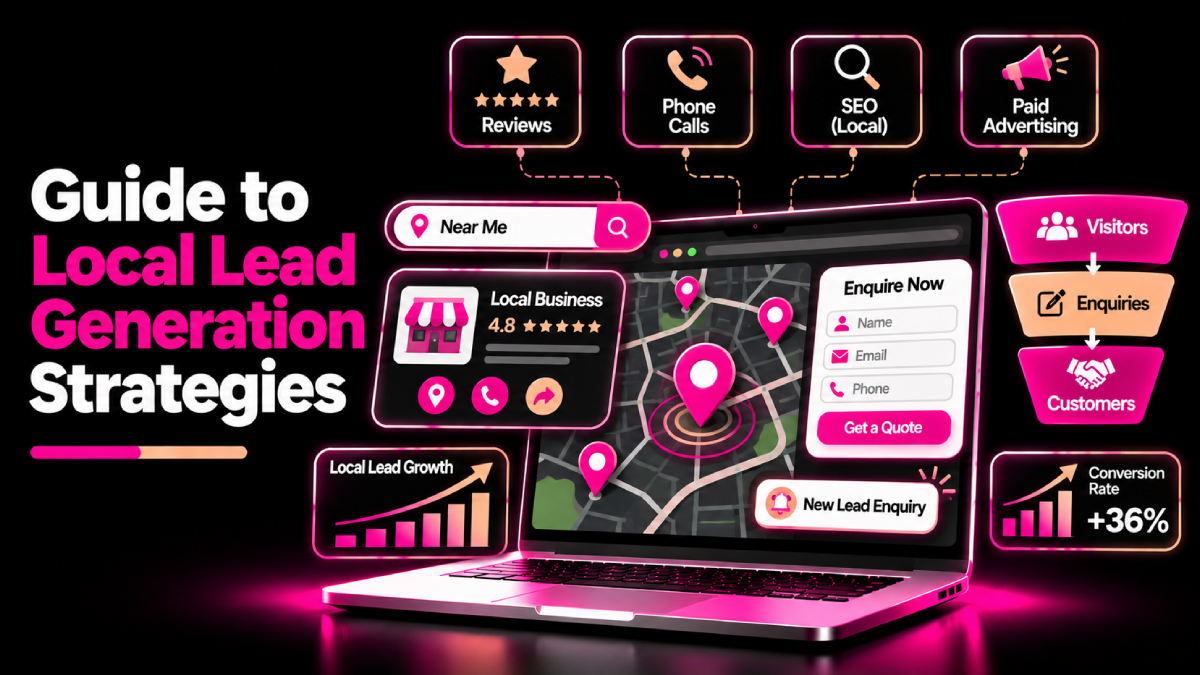
Local businesses do not need to reach everyone online. They need to connect with people in the right locations who are actively looking for their products or services. That is why effective local lead generation strategies focus on attracting nearby customers, building trust, and turning local searches into calls, enquiries, bookings, and sales.
However, appearing in search results is only the first step. Your website, business listings, reviews, advertising, and follow-up process must work together to convert interest into real opportunities.
Whether you operate a home service company, retail store, professional service, or local agency, these strategies can help you build a more consistent pipeline of potential customers.
1. Optimize Your Google Business Profile
Your Google Business Profile helps customers discover your business through Google Search and Maps. For many local businesses, it is an important source of calls, direction requests, and website visits.
Start by completing and reviewing your profile:
- Use your accurate business name, address, and phone number.
- Select the most relevant primary and additional categories.
- Add your service areas where applicable.
- Upload genuine photos of your premises, team, products, or completed work.
- Keep business hours and contact details updated.
- Add your services and relevant business information.
- Respond professionally to customer reviews.
Also, publish useful updates when you have meaningful news, offers, or service information to share.
Follow Google’s official Business Profile guidelines to maintain accurate information and avoid profile issues. Do not add unnecessary keywords to your business name or create duplicate profiles to manipulate visibility.
2. Target Local Search Keywords With Buying Intent
Local keyword research helps you understand how nearby customers search for the services you offer.
For example, someone searching for “plumber near me” may have an immediate need. A person searching for “how to fix a leaking tap” may still be researching the problem.
Both searches can be useful, but they require different content and conversion approaches.
Build a keyword list around:
- Service + location: “digital marketing agency in Ludhiana”
- Service + nearby intent: “roof repair near me”
- Problem-based searches: “emergency drain cleaning”
- Commercial searches: “best local accounting services”
- Comparison searches: “local SEO agency pricing”
Next, assign keywords to relevant service pages and location pages. Avoid creating several nearly identical pages with only the city name changed. Each location page should provide useful, specific information about the area, service availability, customer needs, and local experience.
For a stronger website structure, explore SEOXREACH’s site architecture SEO services.
3. Create Location-Specific Landing Pages
A well-built location page can help customers understand whether your business serves their area and how they can contact you.
For businesses serving multiple locations, create dedicated pages when each location represents a genuine service area or customer market.
Include:
- A clear headline mentioning the service and location
- An explanation of the services available
- Local customer questions and relevant information
- Genuine testimonials or project examples, where available
- Service availability and contact details
- A prominent call, booking, or enquiry option
For example, a roofing company serving several towns could create useful pages explaining its services in each town, including relevant project examples and local service details.
Most importantly, make every page genuinely helpful. Do not publish mass-produced location pages that offer no unique value.
4. Build Local Citations and Relevant Business Listings
Business listings can help customers discover your company across different platforms. They can also support consistency in your business information across the web.
Start with relevant platforms such as:
- Google Business Profile
- Bing Places
- Industry-specific directories
- Local business associations
- Reputable regional directories
Keep your business name, address, phone number, website, and business category consistent wherever they appear.
Prioritize directories that your target customers actually use. A listing on a relevant industry platform can be more valuable than dozens of low-quality directory submissions.
You can also use SEOXREACH’s blog resources to explore related SEO and business visibility topics.
5. Use Customer Reviews to Build Trust
Potential customers often compare several businesses before making a decision. Genuine reviews help them understand what working with your company may be like.
Create a simple process for requesting feedback after a completed purchase or service.
For example:
- Complete the customer’s service or order.
- Send a polite review request.
- Share a direct link to your preferred review platform.
- Thank customers for their feedback.
- Respond to positive and negative reviews professionally.
Never purchase fake reviews, offer rewards in exchange for positive reviews, or pressure customers to change honest feedback.
Instead, use genuine customer feedback to identify service improvements and address recurring concerns. Trust can influence whether a potential customer contacts you, even when your competitors offer similar services.
6. Run Location-Targeted Google and Social Media Ads
Organic visibility can take time to develop. Paid advertising can help businesses reach local audiences while they build their long-term presence.
Google Ads can capture people actively searching for specific services. Social media advertising can introduce your business to relevant local audiences and encourage enquiries.
To improve campaign quality:
- Set geographic targeting around genuine service areas.
- Choose keywords and audiences that match your offer.
- Use location-specific ad copy where appropriate.
- Send visitors to relevant landing pages.
- Track calls, forms, bookings, and purchases.
- Review lead quality before increasing the budget.
For example, a local cleaning company could run separate campaigns for residential cleaning and commercial cleaning rather than sending both audiences to one generic page.
Use Google Ads and Meta for Business to explore the available advertising options.
7. Improve Your Website’s Local Conversion Experience
Generating visitors is not enough if your website makes it difficult for them to take action.
Review your website from a potential customer’s perspective. Can visitors quickly understand what you offer, where you operate, and how to contact you?
Improve the experience with:
- Clear service descriptions
- Visible phone numbers and enquiry buttons
- Short, easy-to-complete contact forms
- Genuine testimonials and business credentials
- Mobile-friendly page layouts
- Fast-loading pages
- Clear service-area information
For mobile visitors, consider a prominent click-to-call option. For more complex services, use a short enquiry form that asks only for information needed to respond.
You can check website performance using Google PageSpeed Insights and review Google’s Core Web Vitals guidance.
8. Track Leads and Follow Up Consistently
A local marketing campaign should not end when someone submits a form or calls your business. A reliable follow-up process helps turn enquiries into customers.
Record the source of each lead, such as:
- Google organic search
- Google Business Profile
- Paid advertising
- Social media
- Business directories
- Referrals
Then monitor key performance indicators:
| Metric | What it tells you |
|---|---|
| Qualified leads | How many enquiries match your target customer |
| Cost per lead | How much you spend to generate an enquiry |
| Lead-to-customer rate | How many leads become paying customers |
| Revenue by channel | Which sources contribute to sales |
| Response time | How quickly your team handles enquiries |
Follow up promptly, answer customer questions clearly, and maintain a consistent process for quotes and bookings.
Review the results monthly. If one channel generates many enquiries but few sales, investigate lead quality, pricing, service fit, and follow-up before investing more money.
Conclusion
Successful local marketing requires more than appearing in search results. Businesses need accurate listings, relevant local content, trustworthy reviews, effective advertising, and a website that makes enquiries easy. Start with the channels your customers already use, measure the leads they generate, and improve the process over time. By applying the right local lead generation strategies, your business can attract more relevant nearby customers and build a stronger foundation for sustainable growth.
FAQs About Guide to Local Lead Generation Strategies
Quick answers related to this guide, and how SEOXREACH can help you apply them.
Local lead generation strategies are marketing activities that help businesses attract potential customers within specific geographic areas. They include local SEO, Google Business Profile optimization, location-based advertising, business listings, reviews, and conversion-focused websites.
Start with a complete Google Business Profile, useful local website content, genuine customer reviews, relevant business listings, and consistent social media activity. These methods require time and effort, but do not require a paid advertising budget.
Local SEO can improve your visibility when nearby customers search for relevant products or services. It can help generate calls, website visits, and enquiries, although results depend on competition, relevance, website quality, and customer demand.
The timeline varies. Paid advertising may generate enquiries sooner, while organic local visibility usually requires ongoing optimization. Your starting position, competition, service area, and website quality all affect results.
Google Business Profile and Google Search are useful for reaching people with local search intent. Facebook and Instagram can help businesses reach relevant audiences, while industry directories can provide additional discovery opportunities. The best platform depends on customer behaviour and business type.
Track qualified enquiries, calls, bookings, cost per lead, conversion rates, and revenue by marketing channel. These metrics provide a clearer picture than website traffic or social media engagement alone.
Ready to Grow Organically?
Get a custom SEO strategy to increase your traffic, leads and revenue with SEOXREACH.
Get a Free SEO Audit →- More Traffic
- Higher Rankings
- Increase Revenue